CAII emblem
CAII
Caribbean AI Institute
Specialist research

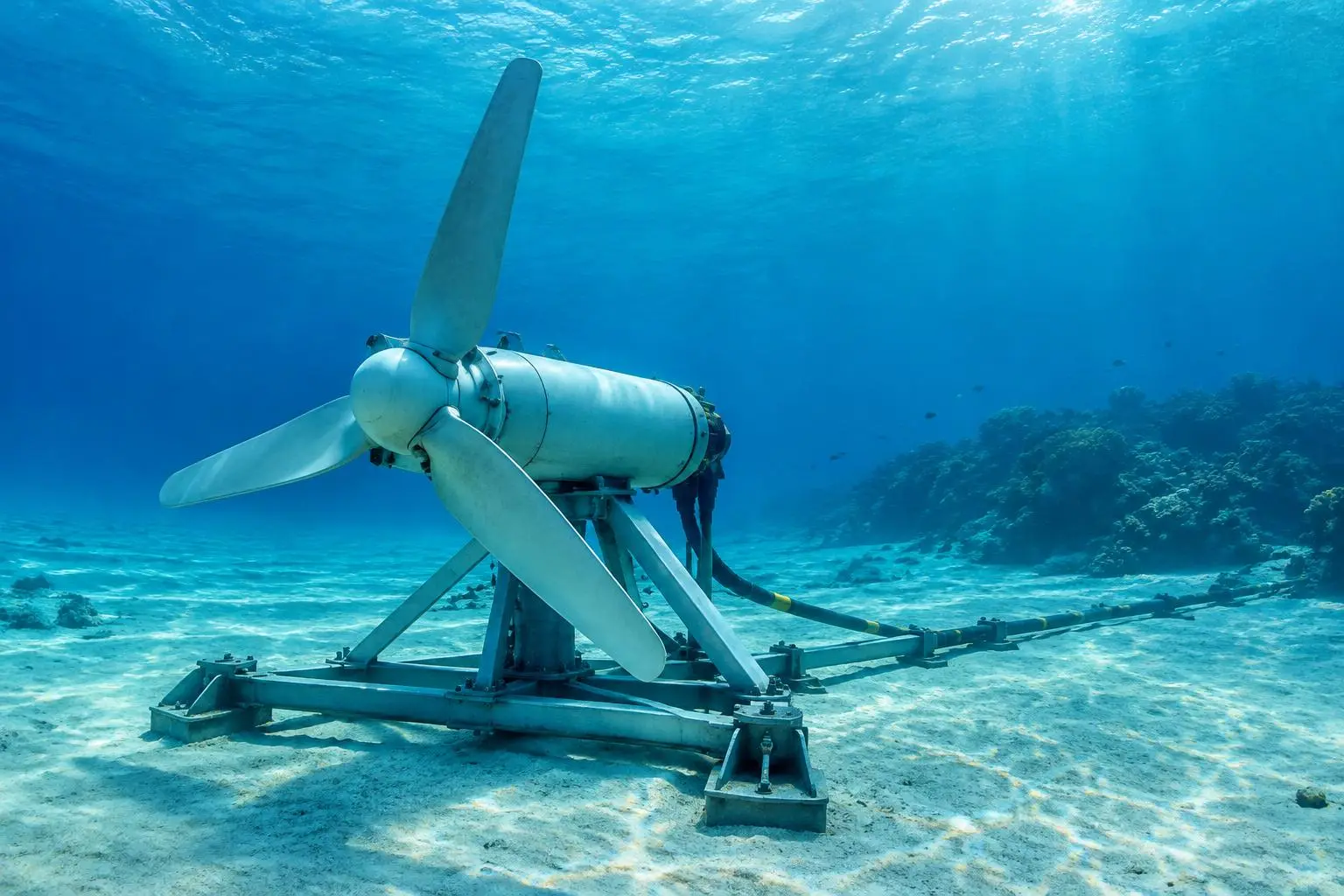
Tidal energy generation

Tidal-current modeling for channels between islands; turbine scheduling around shipping lanes and marine ecosystems; hybrid tidal-solar-storage dispatch.

Engineering concept illustration; not a photograph of a CAII deployment.

Proposed research programme. The goals, methods and outputs below are planning proposals, not confirmed deployments, funded commitments or guaranteed results. Site selection, permits, environmental review and engineering validation remain prerequisites.

Work undertaken · evidence status

CAII progress not verified

No verifiable CAII project reports, test records or deployment evidence have been supplied for this direction. Undertaken work cannot yet be confirmed. This does not establish that no work has occurred. External sources below document third-party methods or trials, not CAII achievements.

Research goals

  1. 01

    Identify channels with usable tidal currents while protecting navigation and marine habitats.

  2. 02

    Integrate predictable tidal generation into island hybrid energy systems.

Technical pathway

  1. 01

    Survey — use current measurements, bathymetry and hydrodynamic models to evaluate resource variability and uncertainty.

  2. 02

    Design — compare turbine configurations and foundations; model turbulence, cavitation, sediment effects and marine-life interaction.

  3. 03

    Validation — simulate tidal-solar-storage dispatch and test operating limits, emergency shutdown and environmental monitoring before a permitted pilot.

Expected outputs

Proposed deliverables · not completed results

  1. 01

    A screened tidal-resource atlas and site-level feasibility methodology.

  2. 02

    Turbine and hybrid-dispatch simulation tools, plus a navigation and ecological monitoring protocol.

Verifiable technical references

References support the proposed technical pathway, not CAII project progress, partnership or certification. Publisher documents retain their original language; standards may require purchase and are not proof of compliance.

  1. IRENA

    Tidal Energy: Technology brief

    Tidal range and tidal-stream technologies, performance and costs; a 2014 overview, not a local resource measurement.

    https://www.irena.org/Publications/2014/Jun/Tidal-Energy

    Open original sourceLink checked: 31 October 2026
  2. EMEC

    Assessment of Performance of Tidal Energy Conversion Systems

    Measurement and reporting procedures for consistent, reproducible tidal-converter performance assessment.

    https://www.emec.org.uk/assessment-of-performance-of-tidal-energy-conversion-systems/

    Open original sourceLink checked: 31 October 2026

Related research teams

Connections are editorial suggestions based on the Institute’s supplied biographies and existing team roles. These people have relevant adjacent expertise; listing them does not confirm specialist project assignments or marine engineering qualifications. Roles below are existing Institute roles, not appointments to this direction.

Direction lead: not yet confirmed by the Institute.

Institute of Climate Resilience & Green Computing AI

View team in organization

Institute of Island Tourism & Blue Economy AI

View team in organization

Independent Centers & Industry Labs

View team in organization

People & research backgrounds

Dr. Carl Joseph

Institute of Climate Resilience & Green Computing AI

Senior Research Fellow, Director of Institute of Climate Resilience & Green Computing AI. Specialises in island climate risk and green computing energy optimisation.

View member profile

Dr. Omar Mohammed

Academy Fellows

Academy Fellow in island microgrid & energy storage. Lead researcher for island PV-storage coordination and off-grid energy resilience.

View member profile

Mr. Ethan Campbell

Institute of Climate Resilience & Green Computing AI

Research Fellow, Director of Island Microgrid & Storage AI Centre. PV-storage dispatching, water-energy co-optimisation and off-grid control algorithms.

View member profile

Dr. Annette Arjoon-Martins

Board of Directors

Marine ecologist at University of the West Indies. Authority on blue carbon and coral reef economics, engaged in Caribbean marine conservation programmes.

View member profile

Dr. Lisa Alleng

Academy Fellows

Academy Fellow in marine remote sensing & coral reef blue carbon accounting. Leads marine ecological AI assessment and blue-carbon asset valuation.

View member profile

Dr. Pedro Alvarez

Independent Centers & Industry Labs

Research Fellow, Director of Marine Remote Sensing & Blue Carbon Metrics Industry Lab. Satellite AI annotation, third-party blue carbon verification and carbon reporting tools.

View member profile